AFTER THE FUNERAL

Formalities over and farewells exchanged,

and a short ride through the town to the station –

May sunshine arouses the smell of departure

and carriages, warms the platform crowded with children.

They’re blazered and tied, and on their way home,

with voices sounding of suburbs and London –

confident in football and matches, their faces laughing,

and eager. Black children from freed generations,

and lost times of service on plantations,

and post war devotion to Queen and to promises.


The train comes and carries them homewards

and station on station deposits them places

where new lives have rooted, chains cast aside

in exchange for mortgages, ambitions, and gardens –

with Kent’s grammar schools nurturing for ages

of networks, home working, promotions.


Slowly the train refills as it cruises the rooftops,

the vanishing churches. More faces, more tongues,

more origin stories. Diasporas quicken and gather.

Down there, on the streets and bombed wastelands,

I grew up, not knowing of trade and decisions,

amongst white faces and chatter, excitement at bus stops.

We had maypoles in playgrounds, Home Service evenings,

a vanishing wartime, and comics and swappings.

Now those faces departed, and friendships forgotten.


And I’m back at the funeral, and Rachael.

A young woman, black and adopted, successful

and funny. Married and leaving her children, her husband,

my dear friends her parents. And taken, cremated.


And suddenly fading: outrage at the Empire,

the passage of slavers, the roots that discredit.

Today there is sunshine, and a city of hopefuls,

of unity, sadness, and still going forward.

Silence of the Lamb

The higher figure is St Stephen, early adopter

of the faith and stoned to death as martyr,

some say the first – with Paul of the epistles

joining in, when he was merely Jewish Saul.

Either way, a big day for them both.


Stephen’s face and hair is modern, a touch

Girls’ Own – not like the second, these eyes

stare from oriental lids, like semi precious stones.

He is Christ Pantocrator [yet another Word

Of God, and not another Christmas show,

though Christmas was indeed His first]. And that

is all we see of him. His mouth is covered

by Stephen’s hand, as if some secret was not

to be divulged, some miracle unuttered. To see

the sacred messenger held back is, to say the least,

unorthodox. A mystery of faith for any competent believer.


But scholarship repairs, explains all doubts, delivers.

Here we have two pictures from different times

and schools. Starts as a painted ikon for a church

which finds the figure of the saint its inspiration.

Some time later the martyr gets made-over with

a Christ, in some smokey workshop where they gild

the portrait till it shines with riches’ holy light.


For a century or so, the face beatifies a castle,

and the world is in its place. Then war and revolution burns,

its owner martyred by soldier atheists who also fire

rounds into the sacred face and toss the picture

in the mud to meet a trampled end, unfaithed.


But you cannot keep a good man down. Especially

Him. The picture’s taken up and hidden. For years

it dares not speak its name – then discovery appears.

It’s mud-engraved, and 3 bullets have left

stigmata on the staring Christ, but restoration

starts. With surgeon skills the holes are healed,

the stained and crusted background cleaned and rubbed away.

The revival soon reveals the older figure buried there

– the youthful face, the auburn hair – and as the hand

appears above the Mouth of God, the rest of Him

becomes a Cheshire cat , and rescue stops.

Should you remove the Son in favour of the Saint?

So an image of a silenced Christ remains, a sort of

collage to an age of doubt, to answer only for itself.


The picture hangs in Ostroh’s University – an ante-chapel

of a simple church – its history displayed. Its message,

layered by the days and times it’s seen, speaks out

the ironies of what may be believed and not, of conflicts

unresolved, of words that struggle to break free.

Mistletoe

On the road to nowhere this August morning,

mistletoe flourishing in pines; butterflies, butter

yellow in the sun, rising in the softening air.

A woodland pastoral of hope, and symbiosis,

as the learned amongst are saying.

We are moving under guard, women, children, elders.

They are taking us to safety, they say. A better

place, less crowded than our ghetto

where families cannot breathe, our men

pursue their trades. Everything is hopeful

with the freshening air, the straight ahead,

the comfort of our gold and treasures in our cases.

Take it with you, they said. For your better days to come.

So a day of laughter, and soldiers with our children

on their backs. Of mistletoe and dancing wings.

Now they halt us in the road. The sun burns

on the way forwards. Gleams with the future.

Into the trees, they say. Rest in the cool.

We have water for the children. And so we walk

among the pines where someone has been tapping them

for resin, their needles soft beneath our feet,

And here we rest. There is talk of the destination,

of sleeping at nightfall.

Ahead there is digging, and lining of people

And silence, then moaning. And firing.

Blue Bus

The blue bus is on the road to Kyiv.
It’s a Monday morning departure and is full
of those returning to their lives or taking new ones.
Refugees from exile in the Baltic – a nail
technician aiding beauty in Lithuania, an angry
woman shouting that the bus is early. Our
Google apps translate this as we go,
distracts us from the lime green store,
now blackened, twisted from a missile strike
that made the news back home.
We are interlopers on their journey. Have tickets
here and out to safety. So the land that passes,
striped greens and browns, is not ours,
but theirs. The engine shivers through our seats,
and the toilet scents the air with pine
and, faintly, piss. The road is arrow straight
as heads bent or nodding, think only
of the day ahead, the emptiness of promises.

April 2025

Remember Them

Ostroh, Ukraine

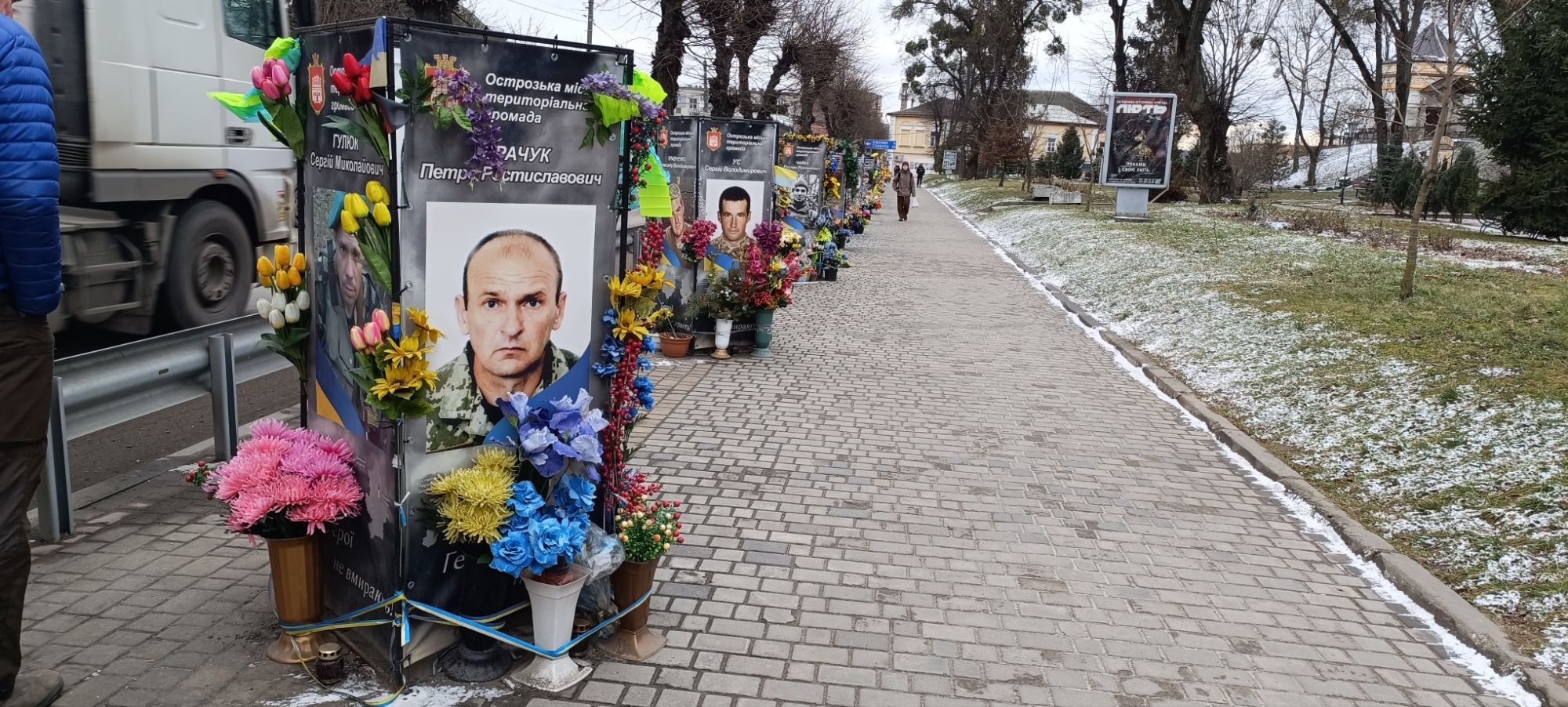
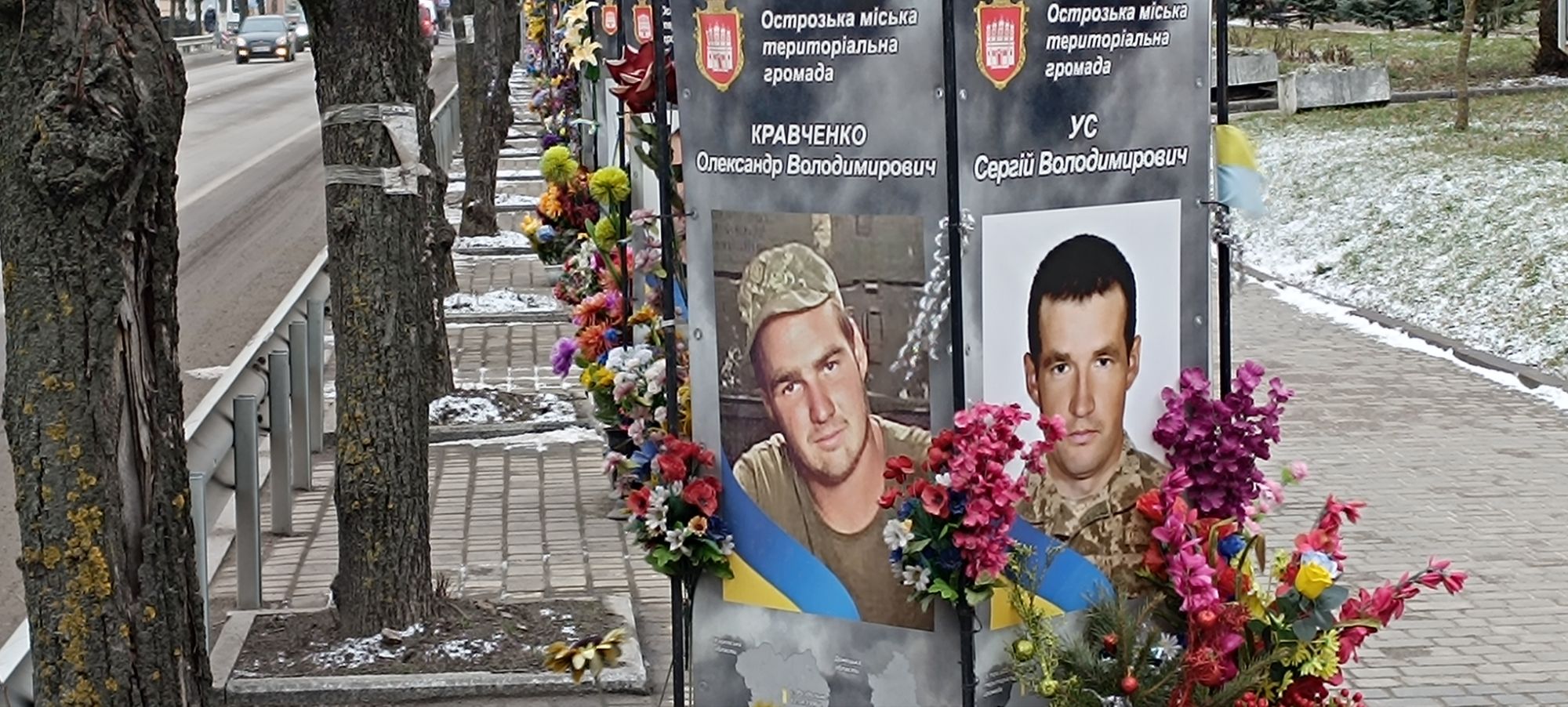
Down the sides of the street are the memorials.

Triangular columns, the height of a man, each side

a photograph of someone’s son, or daughter.

They’re harvested from albums, mobile phones,

picture frames from walls or shelves, and from

The battlefield. A street of smiles, and poses –

Some with held-high weapons, most in army gear,

all vulnerable with confidence. At their feet and sides

the flags of Country, Regiment, bouquets of flowers,

immortal in their everlasting blues and yellows,

and in reds of love. Sometimes a crowd gathers,

or the passer pauses to engage a date – the birth,

the day of death, the place. All that invincibility draining

into space and hope. And time and traffic passes.


Eyemouth, Berwickshire

It’s perpetual summer in our Borders’ fishing town.

No one has come to take away the flowers of youth

[to coin a phrase]. On the lampposts, memories of

Salmon Queens that stretch back into the pageants

of the past. Girls whose glamour has been decked

with showy gowns and sashes, now fading into

age, and local paper cuttings yellowing in drawers.


Hold them all, world. Cradle your sons,

Your daughters. Do not give them up.